
What actually counts as experience
Employers hiring at entry level are not looking for a track record. They are looking for evidence that you can be given something and finish it.
That evidence does not have to come from paid employment. Every item below is legitimate content for an entry-level resume, and most applicants leave at least three of them out:
| Source | What it demonstrates | Where it goes |
|---|---|---|
| Capstone or final-year project | Sustained independent work, technical depth, delivery under a deadline | Projects |
| Coursework projects | Applied skill in a named tool or method | Projects, or under Education |
| Internships and placements | Professional conduct in a real workplace | Experience |
| Part-time and vacation jobs | Reliability, customer handling, cash accountability, training others | Experience |
| Freelance and paid gigs | Client management, scoping, delivery | Experience or Projects |
| Society and club roles | Leadership, budget ownership, event delivery, recruitment | Activities or Experience |
| Volunteering | Commitment, working with the public, safeguarding awareness | Activities |
| Competitions and hackathons | Working at pace in a team, and a result you can name | Projects or Awards |
| Self-taught work | Initiative, and the only proof that you can learn unsupervised | Projects, with a link |
| Caring or family responsibilities | Reliability and time management under real constraint | Only if you want to explain a gap |
Spend thirty minutes listing everything you have done in the last three years — every project, job, society role, course and side effort — with rough dates and any numbers attached. Do not filter while you list. Most people discover two or three things worth including that they had written off as irrelevant.
Section order for an entry level resume
Order is a ranking of your own evidence, and at this stage your strongest evidence is not employment. Use this:
- Contact details — name, city, phone, professional email, LinkedIn or portfolio as plain text
- Summary — three or four lines, ending with the kind of role you want
- Skills — grouped, specific, mirrored from the posting
- Education — degree, institution, year, plus relevant modules if they map to the job
- Projects — two or three, written like miniature jobs
- Experience — internships first, then part-time and unrelated work
- Activities, volunteering, awards, certifications — whatever genuinely adds something
The one thing not to do is bury your degree and your projects on page two under three years of unrelated retail work. Put your best material in the top half of the page.
Writing the summary when you have no title to lead with
An experienced candidate leads with a job title. You lead with your qualification and your best concrete evidence, then name your target.
Objective statement
Recent graduate seeking an entry level opportunity in a reputable company where I can apply my knowledge, gain valuable experience and grow professionally.
Evidence-led summary
Computer science graduate (BSc, 2026) with two web development internships and a deployed capstone serving 400 active users. Comfortable in Python, JavaScript and PostgreSQL. Looking for a backend or full-stack graduate role.
The second version gives a recruiter four usable facts in thirty words. The first gives them none, and it is what most of your competition will send. There are more worked examples in resume summary examples.
Education, done properly
This section carries real weight for the first two or three years of your career, so give it more than one line.
BSc (Hons) Computer Science — University of Manchester · 2023 – 2026 · First Class
Relevant modules: Distributed Systems, Databases, Software Engineering, Machine Learning
Dissertation: real-time collaborative editing using CRDTs — graded 78%
Include relevant modules only when they map to the posting; a full transcript is noise. Add your dissertation or capstone title if it demonstrates applicable skill. State your grade using your market's convention, and only if it helps you or the employer asked.
Also worth including if true: a scholarship or merit award, a study-abroad term, a relevant elective sequence, or a professional accreditation attached to the degree. Not worth including: your secondary school, once you hold a degree.
Projects: your strongest asset
This is where entry-level resumes are won and lost. A project is the only section where you get to show what you can do unsupervised, and it is the part hiring managers actually read.
Write each one as a miniature job: what it is, what you built it with, and what happened.
Campus Events Platform — React, Node.js, PostgreSQL · github.com/yourname/campus-events
- Built and deployed a ticketing platform now used by 3 university societies and 400 registered students.
- Implemented authentication, seat-limited ticketing and automated email reminders; handled 1,200 bookings across 14 events.
- Wrote 60 integration tests after a double-booking bug in the first event; no booking conflicts since.
Three rules that separate a good project entry from a weak one:
- It must have shipped, or at least run. Something with real users beats something more ambitious that stayed on your laptop.
- Name the outcome, not just the stack. “Built a machine learning model” is nothing. “Trained a classifier reaching 91% accuracy on 12,000 labelled records, beating the keyword baseline by 23 points” is something.
- Include the failure you fixed. A line about a bug you found and what you did about it reads as genuine experience, because it is the kind of detail nobody invents.
Two or three projects, at most. Three finished things beat six abandoned ones, and a to-do app from a tutorial actively costs you space.


Part-time and unrelated jobs (do not skip these)
Applicants routinely leave out two years of retail or hospitality work because it is “not relevant”. Employers read it very differently: it is proof you have held a job, turned up, and been trusted with something.
Undersold
Worked as a sales assistant. Duties included serving customers, working the till and stocking shelves.
Written properly
Handled 150+ customer transactions per shift as a keyholder, reconciling a £3,000 till nightly with no shortfalls, and trained 4 new starters on the point-of-sale system.
Same job, same facts. The second version names volume, accountability and responsibility for other people — three things a graduate employer is explicitly looking for.
Give unrelated jobs one or two bullets each and keep them below your projects. If you have several short hospitality or retail roles, group them: Various hospitality roles (part-time, term-time) — 2023 – 2026, then two bullets covering the whole span.
Activities, volunteering and awards
Include these when they carry actual responsibility or a result. A treasurer role with a budget, a society you grew, a team you captained, a charity project you organised — these are leadership evidence at a stage when nobody expects you to have managed staff.
- Treasurer, University Robotics Society (2025–26) — managed a £7,000 annual budget across 9 events; introduced a shared spend tracker that ended two years of end-of-year deficits.
- Volunteer tutor, local sixth form (2024–26) — ran weekly maths sessions for 6 students; 5 achieved their predicted grade or better.
Leave out: passive society membership, hobbies with no bearing on the role, and anything from more than about five years ago unless it is genuinely notable.
Skills
Group by category, put the posting's terms first, and only list what you would accept a question on. At entry level the temptation is to pad — resist it, because an interviewer will ask about the weakest item on the list.
- Languages: Python, JavaScript, SQL, HTML/CSS
- Frameworks & tools: React, Node.js, Express, Git, Docker (basics)
- Data: PostgreSQL, pandas, Excel (PivotTables, XLOOKUP)
- Learning: TypeScript, AWS (Cloud Practitioner exam scheduled 11/2026)
Note the last line. Labelling what you are actively learning is honest, shows trajectory, and gives an interviewer something constructive to ask about. Full lists by field in resume skills.
Turning tasks into bullets
The formula is the same one professionals use: past-tense verb + what you did it to + what changed. What differs at entry level is where you find the numbers — so here is where to look.
| If you did this | Look for this number |
|---|---|
| A university project | Users, records processed, accuracy, marks awarded, team size, weeks taken |
| Retail or hospitality work | Transactions per shift, till value, covers served, people trained, shifts as keyholder |
| A society role | Budget managed, members recruited, events run, attendance, growth |
| Tutoring or coaching | Students taught, sessions delivered, grade improvements |
| An internship | Tasks automated, hours saved, tickets closed, reports produced |
| Volunteering | Hours contributed, people helped, funds raised |
| A competition | Placement, number of teams, time constraint |
Everything on your resume is a possible interview question, and at entry level interviewers probe the detail precisely because there is less of it. If you cannot verify a number, use a count you are sure of, a range, or describe the scope instead.
Nine entry-level mistakes worth avoiding
- Saying you have no experience. Never write this phrase. Describe what you have done instead.
- An objective statement about your own growth. It uses your best four lines to talk about your needs.
- Listing coursework as though modules were achievements. Nobody is impressed that you attended a database course; they care what you built with it.
- Padding to two pages. Or padding to one with 14 pt type and 3 cm margins, which is equally visible.
- Soft-skill lists. “Team player, hardworking, quick learner” is what everyone writes, so it distinguishes nobody.
- Skill rating bars. No extractable text, no shared meaning, and self-rating 2/5 in the posting's key requirement argues against you.
- A design-heavy template. Two columns and graphics are the most common cause of scrambled parsing. See ATS resume tips.
- An unprofessional email address or an empty GitHub link. An abandoned profile is worse than no link, because an interested reader clicks it.
- Sending the same document 60 times. Ten minutes of tailoring per application beats sixty untailored submissions.
Templates that fit one page properly
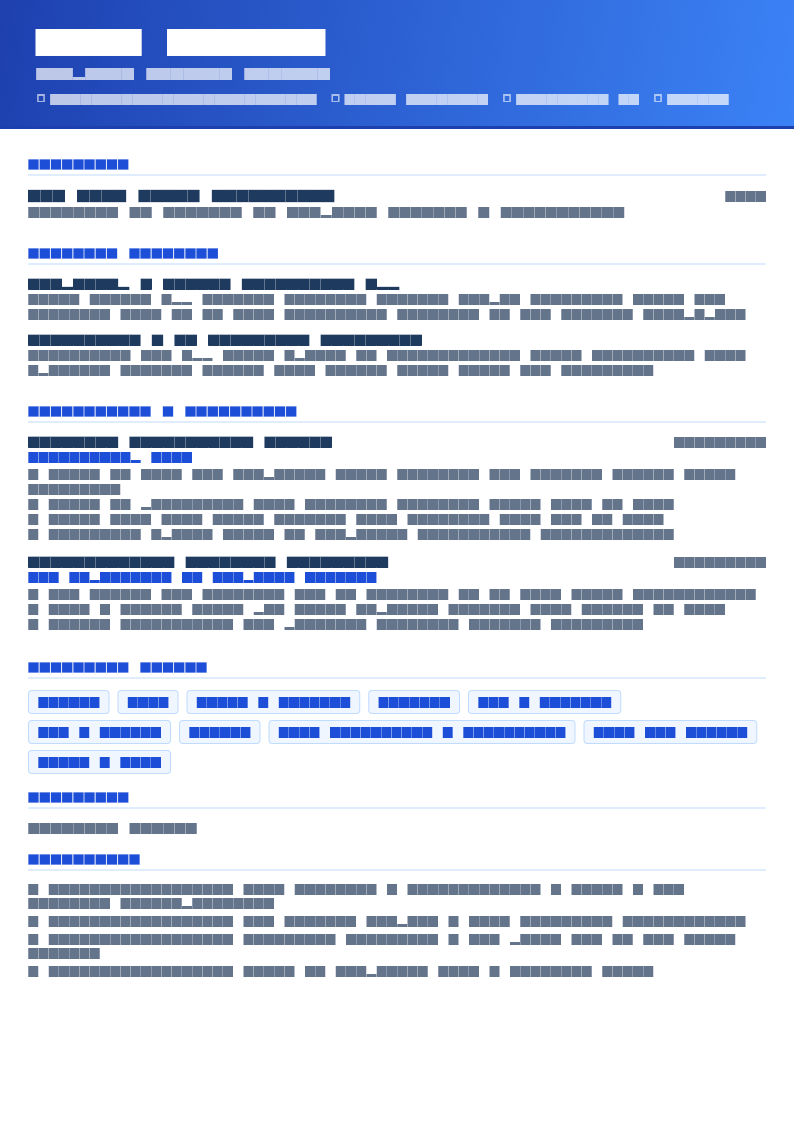
Campus Placement resume template
Campus Placement is built for exactly this situation: one page, education and projects positioned above employment, and enough room for a proper projects section without spilling over. ATS 94, free.
Use this template in NextCV| Template | ATS score | Price | Best for |
|---|---|---|---|
| Campus Placement | 94 | Free | Final-year students, campus recruitment, first graduate applications |
| Graduate ATS | 92 | Premium | Recent graduates with internships and a substantial capstone |
| ATS Pro | 98 | Free | Maximum parsing safety when applying through a large employer's portal |
| Early Student | 84 | Premium | First and second year students with limited history |
| Leadership & Involvement | 85 | Premium | Applicants whose strongest evidence is society leadership and activities |
| Student Athlete | 86 | Premium | Student athletes translating sport into employer-relevant evidence |
Checklist
- One page, single column, text-based PDF
- Summary is evidence-led and names the kind of role you want
- Skills, education and projects sit above unrelated employment
- Two or three projects, each with an outcome and a real number
- Part-time work written with volume, accountability or people trained
- Society and volunteering entries carry a responsibility or a result
- Every skill listed is one you could answer a question about
- No skill bars, no soft-skill list, no photo
- Grade included only if strong or requested
- Any GitHub or portfolio link survives a click
- Summary and skill order tailored to the specific posting
Frequently asked questions
How do I write a resume with no work experience?
Reframe what counts. Coursework projects, a capstone, a dissertation, a society role, volunteering, a part-time job, freelance work, competitions and self-taught projects are all legitimate experience — the test is whether you did something and can describe the outcome.
Structurally: put skills, education and projects above employment, and write every entry with the same bullet pattern a professional would use, ending in a result.
Should an entry level resume be one page?
Yes, one page, without exception. Two pages at this stage signals padding rather than substance, and a recruiter reviewing graduate applications is reading fast.
If you cannot fill one page, widen what you count as experience rather than inflating font size and margins — a half-empty page with 14 pt body text is more obvious than a short one.
Do I include my GPA, percentage or class?
Include it if it is strong, or if the employer asks — many graduate schemes, campus recruitment processes and some professional fields screen on it explicitly. Use the convention of your market: GPA in the US, percentage or CGPA in India, degree classification in the UK.
If it is not competitive and nobody asked, leave it off and let your projects carry the page. An absent grade is unremarkable; a weak one stated prominently is not.
Should I use a resume objective instead of a summary?
Write a summary that ends with what you are targeting, which gets you both. Lead with your qualification and your strongest concrete evidence, then name the kind of role you want in the final clause.
A pure objective — “seeking an opportunity to learn and grow” — spends your best four lines describing your needs rather than your value.
Is a part-time retail or hospitality job worth including?
Yes, and most people undersell it badly. Shift work demonstrates reliability, customer handling under pressure, cash accountability, training others and working to a standard — all of which employers screen for.
Write it with results like any other job: transaction volume, people trained, shifts covered, a process you improved. One or two bullets is enough.
How long should my entry level resume take to write?
Roughly two hours for a first version, because most of the work is remembering and reframing rather than writing. Set aside 30 minutes just to list everything you have done in the last three years before you write a single bullet.
After that, each application should take ten minutes of tailoring the summary and reordering the skills.
NextCV Editorial
NextCV is an AI resume builder by Empire Softtech. We publish the same guidance our in-app ATS analyser is built on — seven weighted sections, 29 templates scored from 72 to 98, and no formatting advice we would not follow ourselves.