
What actually screens a teacher resume
Before anyone assesses your teaching, they establish four things — and all four have to be visible in the top third of page one.
A school recruiter or head of department is checking: are you certified, for what phase and subject, is your safeguarding training current, and have you taught this age group. Those are gating conditions. Vacancies are filled against a term deadline, often from a large pile, and a resume that makes the reader hunt for phase and certification gets set aside.
The second thing that distinguishes strong teaching resumes: cohort context. “Taught mathematics to secondary students” describes half the profession. Class size, set or ability band, cohort size, key stage or grade level, and the intake profile of the school tell a head of department whether you can walk into their timetable.
Certification, phase and subject directly under your summary. Every role labelled with school type, phase, class size and cohort. Bullets that end in attainment, behaviour or curriculum outcomes. Safeguarding current and stated. Two pages, single column, no pupil identifying detail anywhere.
Section order
| # | Trainee / newly qualified | Qualified teacher | Middle or senior leadership |
|---|---|---|---|
| 1 | Contact | Contact | Contact |
| 2 | Summary | Summary | Summary |
| 3 | Certification & endorsements | Certification & endorsements | Certification & endorsements |
| 4 | Education | Teaching experience | Leadership & teaching experience |
| 5 | Training placements | Curriculum & subject expertise | Curriculum, outcomes & whole-school impact |
| 6 | Skills & technology | Skills & technology | Education |
| 7 | Other employment | Education | Professional development, governance, publications |
| 8 | Professional development | Professional development | Skills & technology |
Certification and endorsements
Give the awarding body, the phase or age range, the subject endorsement, and the date. Ambiguity here costs you, because a recruiter cannot risk a shortlist slot on a maybe.
- Qualified Teacher Status (QTS) — Department for Education, England, 2017 · Secondary Mathematics (11–18)
- Further Mathematics endorsement — 2021
- Designated Safeguarding Lead — Level 3, renewed 03/2026
- National Professional Qualification for Senior Leadership (NPQSL) — in progress, completion 2027
If you hold certification in more than one jurisdiction — a state licence plus a national qualification, or QTS plus an international equivalent — list each separately with its issuing authority. For US applications, name the state, the licence type, the endorsement areas and the expiry. Reciprocity between jurisdictions is a live question in teacher recruitment, so make it easy to answer.
The summary
Generic
Passionate and dedicated teacher with a love of learning and a commitment to helping every child reach their full potential in a supportive classroom environment.
Specific
Secondary mathematics teacher with 9 years across Years 9–13, QTS with a further-maths endorsement. Head of department for 3 years leading 6 staff and a 420-student cohort. Rebuilt the Year 11 scheme of work, lifting the pass rate from 71% to 86% over two cycles.
Phase, subject, years, certification, scope, result — six facts in three lines. “Passionate about learning” is the baseline expectation of everyone applying, so stating it uses a line and distinguishes nobody.
Describing a class and cohort
Add a one-line descriptor under each role, before the bullets. It is the highest-density information on the page.
Head of Mathematics — Northfield Academy, Leeds · 09/2021 – Present
11–18 comprehensive, 1,400 on roll, 38% pupil premium. Department of 6 staff, 420-student cohort across KS3–KS5. Own timetable: Year 11 top set, Year 13 Further Maths.
- Rebuilt the Year 11 scheme of work around weekly retrieval practice and low-stakes assessment; grade 5+ pass rate rose from 71% to 86% across two cohorts.
- Designed a targeted intervention for 38 borderline students; 29 moved up at least one grade band within the academic year.
- Mentored 4 early-career teachers through statutory induction — all passed first-year review and remained in the department.
Include what applies from this list: school type and phase, number on roll, intake profile (pupil premium, free school meals, EAL proportion, Title I status, catchment), your timetable and sets, department size if you lead one, and cohort size.
Attainment and behaviour bullets
Every teacher plans lessons, marks work and communicates with parents. None of that distinguishes you. What distinguishes you is a change you caused, described with a baseline.
Duty
Responsible for planning and delivering lessons, marking student work and communicating with parents about progress.
Outcome
Introduced a fortnightly low-stakes quiz and reteach cycle across three Year 10 sets; the proportion working at or above target rose from 58% to 79% by the summer assessment.
Where to find outcomes you can actually cite — most of these are in data you already receive:
| Category | What you can usually cite |
|---|---|
| Attainment | Pass rates, grade distributions, value-added or progress measures, proportion at or above target, comparison to prior cohort or department average |
| Progress groups | Outcomes for pupil premium, SEND, EAL or high-attaining groups; gap narrowing |
| Behaviour | Referral and detention counts, exclusions, on-task observation data, punctuality, attendance in your classes |
| Curriculum | Schemes of work written, resources adopted department-wide, moderation outcomes, options uptake and retention into KS5 |
| Colleagues | Trainees and ECTs mentored, CPD delivered and to how many staff, retention among your mentees |
| Whole school | Inspection or accreditation outcomes for your area, parental engagement rates, enrichment programmes launched and participation |
Two credibility rules. Say whether you owned it or contributed. “As head of department” and “as part of the maths team” are both fine; conflating them is not. And always include the baseline — a bare “86% pass rate” could be an improvement or a decline, and an experienced reader will assume the latter.


Skills and classroom technology
- Pedagogy: differentiated instruction, retrieval practice, scaffolding, formative assessment, inquiry-based learning
- Curriculum: scheme-of-work design, curriculum mapping, moderation, standards alignment, exam board specifications (AQA, Edexcel)
- Inclusion: SEND / IEP implementation, EAL and ELL support, reasonable adjustments, access arrangements
- Behaviour: whole-school behaviour systems, restorative practice, positive behaviour support
- Technology: Google Classroom, Microsoft Teams for Education, Canvas, SIMS, Arbor, Kahoot, Seesaw
- Data: attainment tracking, gap analysis, target setting, progress reporting to leadership and parents
Name the management information system you have used — SIMS, Arbor, Bromcom, PowerSchool, Infinite Campus. It is a genuine keyword filter, because onboarding cost differs sharply between a teacher who already knows the platform and one who does not. Field-by-field lists in resume skills.
New and trainee teachers
The recurring mistake is describing placements as observation. They were teaching, and they should be written as employment.
PGCE Placement B — Ashcroft High School, Manchester · 01/2026 – 05/2026 · 60 days
11–16 comprehensive, 1,050 on roll, 41% pupil premium. Timetable: 14 periods across Years 7, 9 and 10 mathematics.
- Planned and delivered a full 6-week unit on ratio and proportion to two Year 9 sets, including all assessment and feedback.
- Introduced a mini-whiteboard checking routine to a low-attaining Year 7 set; on-task time rose from roughly 60% to 85% across three lesson observations.
- Ran 12 parent conversations at the Year 9 progress evening under mentor supervision.
Also include: total placement days or teaching hours across your training, the phases and key stages you have covered, your subject specialism and any second subject, and the grade or judgement your final placement received if it was strong. Tutoring, summer camp, teaching-assistant and coaching work all count — give them a line each with numbers.
Primary, secondary, SEND and leadership
| Applying for | Foreground | Typical evidence |
|---|---|---|
| Primary / elementary | Phase range, whole-class responsibility, phonics and early reading, subject leadership | Reading and phonics progress data, class size, subject lead role, EYFS or KS1/KS2 experience |
| Secondary subject | Subject, key stages, exam board, set profile | Pass rates and progress measures, options uptake, KS5 retention |
| SEND / special education | Needs profile, ratios, provision type, statutory paperwork | EHCP or IEP caseload, TA team led, annual review outcomes, provision mapping |
| Middle leadership | Team size, budget, curriculum ownership, line management | Department outcomes, staff retention, CPD delivered, curriculum rewrite |
| Senior leadership | Whole-school remit, budget, accountability, inspection | Whole-school data, inspection judgements for your area, staff development, strategic plans owned |
| Supply / substitute | Breadth, adaptability, phases covered | Schools worked, phases and subjects covered, repeat bookings |
Supply teachers should group assignments under the agency as a single employer with schools listed beneath, which reads as continuous work rather than a dozen short jobs, and lets you show breadth of phase and setting.
Safeguarding and compliance
State your current safeguarding or child protection training with its level and date, plus any designated role. Schools verify it, and an absence is conspicuous. Also worth a line if applicable: enhanced background clearance status (DBS in the UK, state background check in the US), first aid certification, and prevent or equivalent statutory training.
No pupil names, initials, year-and-class combinations, photographs, or case narratives specific enough to identify a child — including safeguarding examples. A resume is an uncontrolled document. A recruiter who sees identifiable detail will read it as a serious safeguarding judgement failure, and will be right to.
Describe cohorts and outcomes instead: “a low-attaining Year 7 set of 24, 9 with SEND support plans”.
What else to leave off
- A photo, in the UK, US, Canada, Australia and Ireland.
- Date of birth, marital status, full street address.
- School-internal shorthand. “Set 4B/Ma2” means nothing outside the building — write “a middle-ability Year 9 mathematics set of 28”.
- Lesson plans and long philosophy statements. If a school wants a teaching philosophy, it will ask for one separately.
- Skill rating bars. No extractable text and no shared meaning.
- Referee contact details unless the application explicitly requests them on the document.
Templates
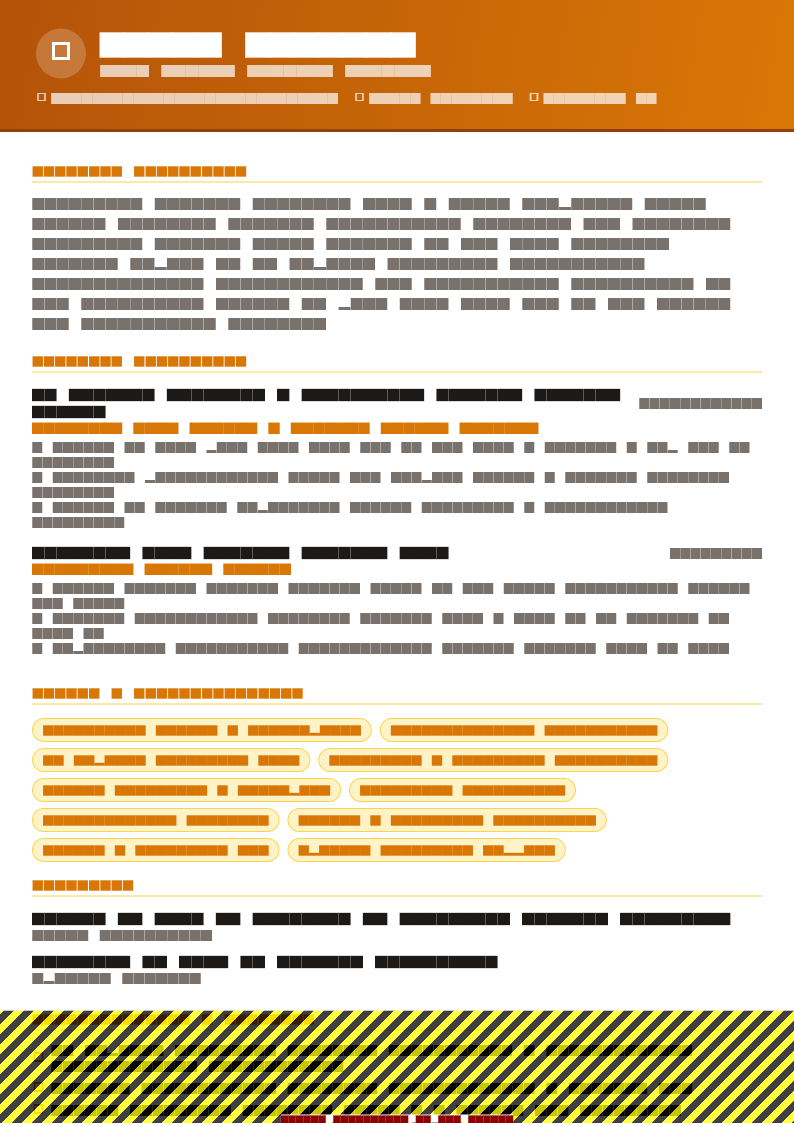
Education & Teaching resume template
Education & Teaching keeps certification, phase and subject in the upper third where school recruiters look first, and gives the experience section room for cohort descriptors plus three to five bullets per role. ATS 89.
Use this template in NextCV| Template | ATS score | Price | Best for |
|---|---|---|---|
| Education & Teaching | 89 | Premium | Qualified teachers — certification and phase positioned first |
| ATS Pro | 98 | Free | Large trust, district or academy chain portals where parsing safety matters most |
| ATS Minimal | 96 | Premium | Two-page histories with several schools and long CPD records |
| Pure White | 95 | Free | Senior leadership applications wanting a restrained document |
| Graduate ATS | 92 | Premium | Trainee and newly qualified teachers leading with placements |
Checklist
- Certification, phase and subject visible in the top third of page one
- Awarding body and date given for every qualification
- Safeguarding training level and renewal date stated
- Every role carries a cohort descriptor: school type, roll, intake, timetable, sets
- Bullets include a baseline as well as a result
- Ownership versus contribution stated accurately
- Management information system named
- Trainees: placements written as employment with days and phases
- Zero pupil-identifying detail anywhere in the document
- Two pages, single column, text-based PDF
- Summary and skills tailored to the specific school and post
Frequently asked questions
How long should a teacher resume be?
Two pages for most qualified teachers, one page for a trainee or newly qualified applicant. Teaching is a field where a second page is expected, because certification, phase, subject specialisms, safeguarding training and curriculum work all have to fit alongside employment.
Beyond two pages, only leadership and academic applications justify the length — and in those cases the extra content should be curriculum, results data or published work, not more adjectives.
Where do teaching certifications go on a resume?
High — directly after the summary, before employment. Certification status, the phase and subject you are qualified for, and any endorsements are eligibility criteria, and school recruiters filter on them.
Give the awarding body, the phase or age range, the subject endorsement, and the date. If you are qualified in more than one jurisdiction, say so explicitly.
What should a teacher put on a resume with no teaching experience?
Your training placements, written as employment. Each placement gets the school type, phase, class size, and what you actually taught and achieved — the same structure a qualified teacher uses.
Add total placement days or teaching hours, your specialism, and any tutoring, coaching, camp or teaching-assistant work. Trainees consistently undersell placements by describing them as observation.
Should I include exam results and attainment data?
Yes, and it is the strongest content available to you — but frame it carefully. Give a before-and-after or a comparison against a baseline, and be clear whether you owned the cohort or contributed to a department result.
“Lifted the Year 11 pass rate from 71% to 86% over two cycles as head of department” is credible. A bare percentage with no context invites a sceptical question.
Do I need to mention safeguarding training?
Yes, briefly. Current safeguarding or child protection training, and any designated role you have held, belongs in your certifications block. Schools verify it and its absence is noticeable.
Keep it to a line with the level and date. Do not describe individual cases — that is a confidentiality breach and a serious judgement signal.
Is a teacher resume different from a teacher CV?
In the UK, Ireland and much of the Commonwealth the document is called a CV and typically runs to two pages with a personal statement; in the US it is a resume and is often accompanied by a separate teaching philosophy statement.
The substance is the same: certification and phase first, cohort context under each role, and attainment-based bullets. Follow the local naming and length convention.
NextCV Editorial
NextCV is an AI resume builder by Empire Softtech. We publish the same guidance our in-app ATS analyser is built on — seven weighted sections, 29 templates scored from 72 to 98, and no formatting advice we would not follow ourselves.